Bringing Artificial Intelligence Closer to Devices
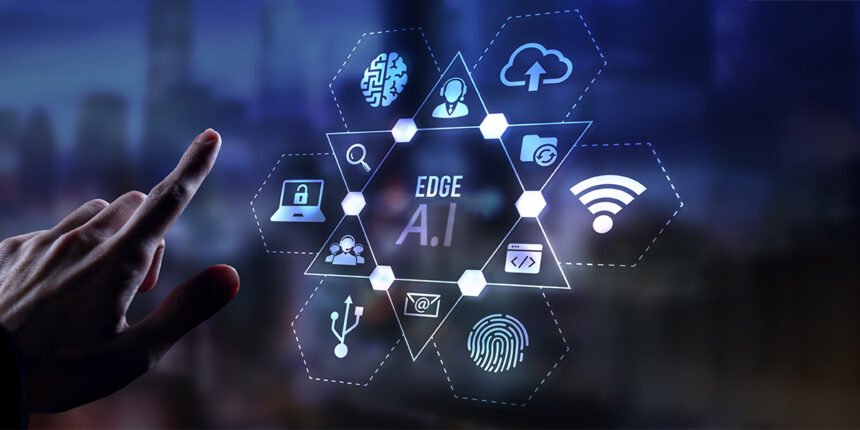
Edge AI is emerging as one of the most important technological trends, allowing artificial intelligence to operate directly on devices rather than relying solely on cloud servers. This approach reduces latency, improves privacy, and enables faster decision-making.
Traditional AI systems depend heavily on cloud computing to process data. While effective, this method can introduce delays and require constant internet connectivity. Edge AI solves this problem by performing data processing locally on smartphones, IoT devices, and embedded systems.
One major benefit of edge AI is real-time performance. Applications such as smart cameras, wearable technology, and autonomous systems can analyze information instantly without waiting for cloud responses. This capability is especially valuable in industries where speed and accuracy are critical.
Privacy is another key advantage. Since data is processed locally, sensitive information does not need to travel across networks, reducing the risk of exposure. As data protection regulations become stricter, many organizations are exploring edge AI solutions to maintain compliance.
Despite its potential, edge AI presents challenges such as hardware limitations and energy efficiency concerns. Developers must design algorithms that balance performance with resource usage. However, ongoing advancements in chip technology and machine learning optimization are making edge AI more accessible than ever.
Experts believe that edge AI will play a central role in the future of smart devices and connected systems. By bringing intelligence closer to users, this technology is reshaping how digital services operate in real-world environments.