How Intelligent Systems Are Changing Global Work
Artificial intelligence is rapidly transforming the global economy by automating tasks that once required significant human effort. This shift, often described as the “automation economy,” is redefining productivity, reshaping industries, and influencing how businesses approach growth and innovation.
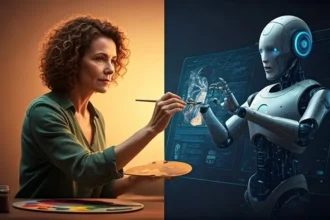
One of the most visible impacts of AI-driven automation is the evolution of workplace roles. Instead of focusing solely on repetitive tasks, employees are increasingly moving toward strategic and creative responsibilities. Automation tools handle data analysis, scheduling, reporting, and operational monitoring, allowing teams to concentrate on innovation and decision-making.
Industries such as digital marketing, customer service, and online publishing are already seeing major changes. AI-powered chat systems provide instant responses to user inquiries, while machine learning platforms analyze campaign performance and optimize content delivery. This transformation improves efficiency while reducing operational costs — a critical factor for modern digital businesses.
However, the automation economy also raises questions about workforce adaptation. Experts emphasize the importance of reskilling and continuous learning to help professionals adapt to evolving technological landscapes. Rather than replacing jobs entirely, AI is expected to create new roles focused on managing intelligent systems and interpreting complex data.
Ethical considerations are also central to the discussion. Businesses must balance efficiency with fairness, ensuring that automation enhances opportunities rather than creating inequality. Transparency in AI decision-making processes is becoming increasingly important as organizations adopt automated solutions.
Looking ahead, the automation economy will likely continue expanding as AI becomes more accessible to small and medium-sized businesses. Companies that embrace automation strategically — while investing in human creativity and expertise — may gain a significant competitive advantage in the digital era.